

“Best Agricultural Newsletter in Hawaii”
Newsletter of the Kona Coffee Farmers Association
April 2026
PO Box 5436 Kailua Kona Hawaii 96745 USA
www.konacoffeefarmers.org info@konacoffeefarmers.org
Contents
Message from KCFA President Peterson
Coffee Trees Weathering the Wind
Post-Storm Coffee Tree Health
Hawai’i Agricultural Disaster Impact Survey
Coffee Farm Manager Shortage?
Coffee Tree Pruning Workshop, Part Two
Wobble Disk Roaster – Larry Cotton
Kona Low Devastates 176-Year-Old Greenwell Farm
Burger Study: Coffee Pulp Powder as Beef Fat Replacement
Editor: Clare Wilson
Message from President Petersen
Aloha Coffee Farmers,
The big news this month is, of course, the catastrophic storm that struck Kona. The sheer volume of water that rushed through our region—scouring the land and especially our farms—was staggering. Many washes were carved or widened in ways that will leave their mark for decades. My hope is that every farmer and every farm will find time and resources to heal from this event.
There are disaster-assistance programs available to help with restoration costs. Please remember to take photos of the damage to your farm; good documentation will be important for any programs to which you may apply.
If you missed the Coffee Farmers Symposium—or if you would like to revisit your favorite presentations—you can view all the 2026 Coffee Symposium Presentations online click >>> here:
I would also like to remind everyone about the proposal introduced by one of our members to launch a KCFA/Farm Sign Program. These 12×18 aluminum signs feature both the KCFA logo and your farm’s own logo. We displayed a demo sign at the symposium, and several farmers placed orders on the s, and the first sign has already gone into production. Go here to order: https://
Your Association has also been active at the Legislature in support of HB2119, which reestablishes the Coffee Berry Borer and Coffee Leaf Rust Pesticide Subsidy Program. The bill is approaching its final committee hearing, and we need a strong showing of written testimony from farmers. If you receive an email requesting testimony, please take a moment to submit your support—even checking a single box makes a difference. We will keep you updated as the bill progresses.
Finally, I am pleased to share that our Vice President, Suzanne Shriner, has been nominated by Governor Green to serve on the ten-member Board of Agriculture and Biosecurity for Hawai‘i Island. It is encouraging to see a Kona coffee farmer and KCFA Board member considered for this key role. If you wish, you may submit a letter in support of her nomination to the Governor’s office. It is valuable for Suzanne to have the backing of island farmers.
As we move forward, I wish you a smooth and speedy cleanup from the storm and healthy trees in the months ahead.
Mahalo nui loa!

Mark Petersen, President
Weathering the Wind:
How Coffee Trees Respond to Gale-Force Events
The recent gale-force winds on the Kona side of the Big Island left many of us walking our orchards with a knot in the stomach—looking at shredded leaves, broken branches, and wondering what this means for the coming harvest. Coffee is a tough perennial, but it is not invincible. Understanding how wind affects coffee trees, and how they recover, can help us respond with calm, informed management rather than worry.
How susceptible are coffee trees to wind damage?
Coffee is considered a climate-sensitive crop, and strong winds are a recognized stress factor in most coffee-growing regions. Wind can:
- Strip leaves (defoliation), reducing photosynthesis in the short term
- Break or bend branches, especially older or heavily loaded ones
- Cause flower and fruit drop, particularly when tissues are young and tender
- Increase vulnerability to pests and disease through fresh wounds
Trees that are tall, poorly pruned, or exposed on ridges and field edges tend to suffer more damage. Farms with shade trees or windbreaks usually report less defoliation and fewer broken branches, because wind speed at canopy level is reduced.
If leaves are blown off, how long until trees recover?
Leaves are the “solar panels” of the tree. When a wind event strips foliage, the tree temporarily loses much of its capacity to produce energy.
- With mild to moderate defoliation (some leaves remaining on most branches), coffee trees typically flush new leaves within about 4–8 weeks, assuming adequate soil moisture and nutrition.
- With severe defoliation and branch breakage, the tree must rebuild both foliage and structural wood. In these cases, it can take several months before the canopy looks “normal” again, and one full season before productivity fully stabilizes.
The good news is that coffee has strong regenerative capacity. As long as the main stems and root system remain healthy, trees can rebuild a functional canopy.
What if wind hits during flowering or early cherry development?
Timing matters as much as intensity.
- During flowering:
When winds arrive while flowers are open or buds are just about to open, blossoms can be stripped off or damaged. Because each flower is a potential cherry, flower loss translates directly into reduced fruit set. Studies in other coffee regions have shown that storms during peak flowering can significantly reduce the number of cherries per node at harvest. - During early cherry development:
When cherries are very young and still loosely attached, strong winds can cause fruit drop or small stem breakage. Some cherries may remain but be scarred or undersized. While this is usually less severe than losing the flowers themselves, it can still reduce yield, especially if the event is widespread across the farm.
Should we expect a decrease in coffee harvest?
In many cases, yes—but the degree of loss will vary by farm and by block.
Factors that influence yield impact include:
- How much foliage was lost (light vs. heavy defoliation)
- Whether flowers or very young cherries were present during the wind event
- Extent of branch breakage and structural damage
- Tree age and vigor before the storm
If the wind mainly removed leaves but left branches and nodes intact, and if flowering had not yet occurred (or was already finished), yield impacts may be modest. If the wind coincided with peak flowering or very early fruit set, a noticeable reduction in harvest is more likely.
References may be found here:
POST-STORM COFFEE TREE HEALTH
Will the Kona Low storms impact your coffee trees long-term? Many farms saw trees
tipped over, branches defoliated and roots exposed. How do growers repair the
damage, seen and unseen? SHAC and ARS PBARC reached out to scientists in Hawaii
and Puerto Rico as well as fertilizer reps for answers. Dr. Melissa Johnson has drafted
some recommendations. The full document is on the KCFA website here. Follow this
link for detailed instructions on pruning, fertility needs, drainage/soil recovery, CLR
protection timing.

How to assess storm damage in the field
• Estimate leaf loss by comparing current canopy density to pre-storm condition or
nearby less-damaged trees.
• Note structural damage: broken laterals, split stems, hanging branches, and
snapped verticals.
• Check root-zone condition: standing water, waterlogging, compaction, and sediment
accumulation.
• Record CLR history for each block. New leaf flush after storms is a high-risk period,
especially where rust is already established.
Fertility recovery program
Post-storm fertility should support leaf regrowth with a focus on foliar feeding. Nitrogen
drives new leaf production, potassium supports stress recovery, magnesium supports
chlorophyll rebuilding, and micronutrients such as boron and zinc help support new
tissue development. Biostimulant products with algae extracts, such as Maxicrop,
Dalgin, or others can be particularly helpful for leaf regrowth.
New growth is particularly vulnerable to CLR, so mix the products above with a CLR
spray.
One-week action plan for growers
• Day 1-2: walk the block, estimate damage, and choose the correct branch of the
decision tree.
• Day 2-4: prune broken or heavily damaged tissue and restore drainage access.
• Day 3-5: apply the first nutrition pass if soils are workable; use foliar nutrition sooner if
roots appear stressed.
• Day 7 onward: scout for bud break and new flush; shift attention to CLR protection
during the flush window.
Bottom line: prune enough to remove non-productive tissue, feed enough to rebuild
canopy, and protect new flush before disease gets ahead of recovery.
Final note: many coffee trees died in the weeks after Hurricane Maria, despite having
survived the initial winds. While not studied or documented, Puerto Rican scientists
speculated this could be due to cracks in the roots which allow Fusarium fungus to
attack the tree. There is no treatment for Fusarium Wilt. For this reason, we recommend
foliar versus granular nutrition as adding N to the soil may promote fungal growth.
Download the full document here below:
https://konacoffeefarmers.org/wp-content/uploads/2026/03/post_storm_coffee_recovery_guide.pdf
(you may have to copy and paste the entire above URL into your browser)
Hawai’i Agricultural Disaster Impact Survey

The Hawaiʻi Farm Bureau is working alongside the USDA, FSA, the Hawaiʻi Department of Agriculture and Biosecurity, our congressional delegation, and other partners to support farmers impacted by flooding and high winds. One of the most important things you can do right now whether your operation had minor damage or major, is fill out the Hawaiʻi Agricultural Disaster Impact Survey. This data directly shapes what resources get directed to our community, so every response matters
Coffee Farm Manager Shortage?
There seem to be some current issues about the availability of farm managers among coffee farmers in the Kona District. Several folks have said they have a farm manager and might need to change. Others have said they have been doing all the work themselves and are now thinking of using a farm manager. There is interest in farm managers who might be able, or want, to take on additional farms.
Farm managers are persons who handle the vast bulk of the work on your coffee farm: pruning, fertilizing, spraying, harvesting, stripping raisins, cutting weeds. The agreement between the farm owner and the farm manager includes extent of management, division of costs, and method of payment to the farm manager.
Do you have a farm manager who needs more work? Do you need a farm manager? Send an email to info@konacoffeefarmers.org and we will try to play matchmaker.
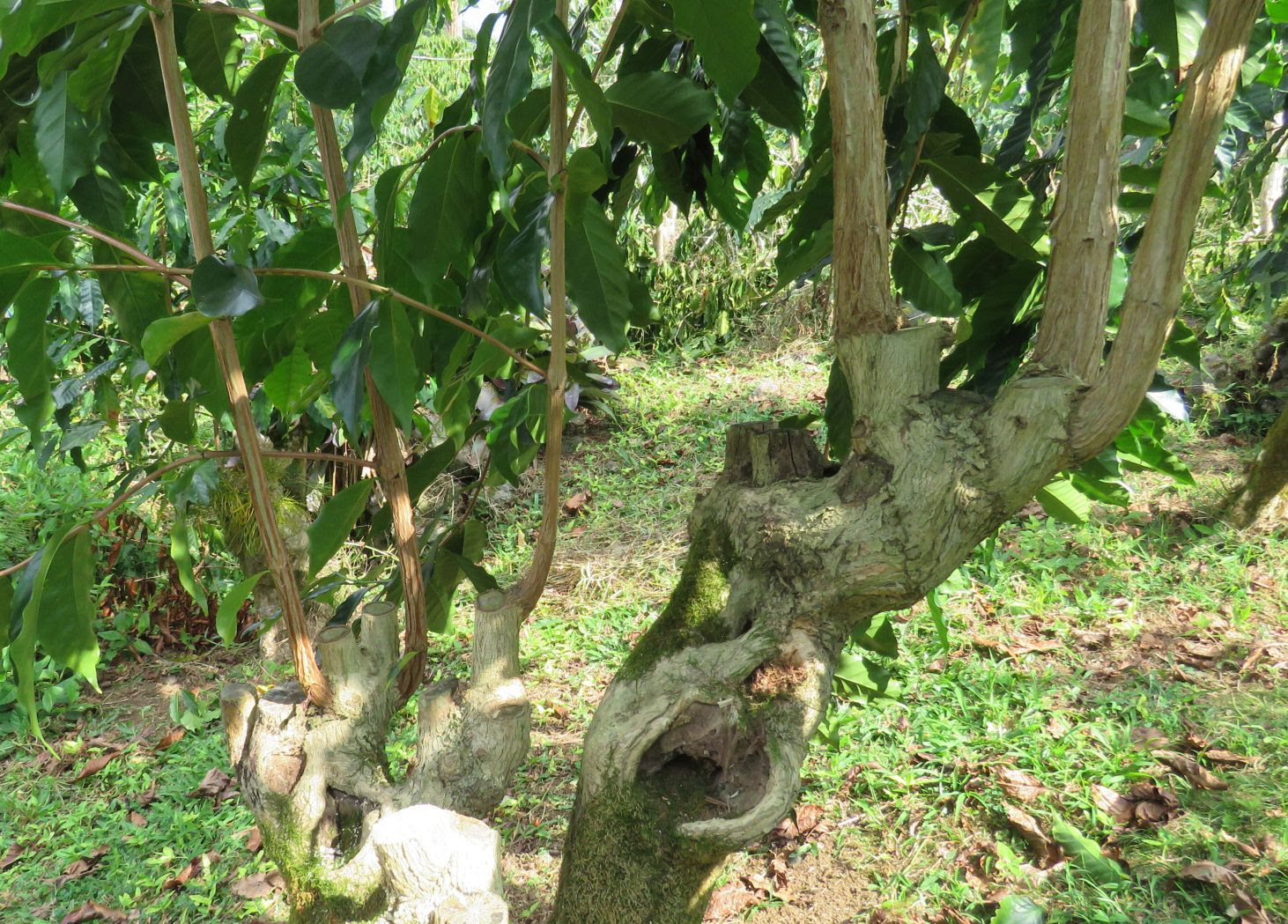
KCFA Pruning Workshop – May 2nd
Part 2: Choosing the Best Verticals
WHEN: Saturday, May 02, 2026
WHY: How to Prune your Coffee for Maximum Health and Yield – Choosing the best verticals
Where: Lehu’ula Farms, 79-7350 Mamalahoa Hwy in Kainaliu. (Next to Kona Joe’s)
Registration opens at 8:30 and the class promptly starts at 9:00
All are welcome. Free to KCFA members, $10 to non-members (which can be applied to the $50 annual dues). Please bring a chair if you experience discomfort in standing.
 Sponsored by KCFA Board of Directors and the KCFA’s Education Committee.
Wobble Disk Roaster with Maker Larry Cotton
https://tinyurl.com/5dfuma32

“What makes the wobble disk story even more unusual is how it is spreading. Rather than a polished product launch or an influencer push, the roaster’s momentum has grown through old-school enthusiast channels: DIY write-ups, forum threads, videos and shared schematics that move from one tinkerer to the next.
Many of these threads lead back to one man: Larry Cotton.
A retired power-tool designer and part-time community college math instructor in New Bern, North Carolina, Cotton has spent more than 15 years experimenting with home roaster builds. Following early designs involving a spinning basket and then a rotating dog bowl, Cotton said the wobble disk mechanism became the breakthrough that stuck.
“The wobble disk stayed in the picture forever. That was the one thing that I really discovered, and that worked very well to keep the beans equally browned,” Cotton told Daily Coffee News. “It did a really good job of circulating the beans. The beans have to move, and they really do move well with the wobble disk.”…”
Why More Producers are Focusing their Marketing Around Authenticity
https://tinyurl.com/52ksrurp

- Coffee producers are communicating in a more authentic manner than ever before
- As the language of specialty became standardised and repetitive – this shift may be a way to break the mould
- With nearly 69% of the global population now online, digital connectivity is less of an issue than ever before
In specialty coffee, marketing at origin has rarely stood still. Over the past decade, producers increasingly professionalised how they presented themselves to buyers: structured websites, brand decks, certifications, traceability and sustainability data, and carefully curated storytelling became standard.
But that polish now appears to be recalibrating. Across producing countries, more farms and exporters are leaning into direct & personal communication. Founder updates, origin commentary, and less mediated messaging are becoming more visible.
Rather than signaling a retreat from professionalism, this shift may reflect something more structural. As more producers seek to build stronger connections to their global customer base, there is a generational and technological reset in how credibility is built, and how relationships are maintained….”
Kona Low Devastates 176-Year-Old Coffee Farm on Big Island
https://mauinow.com/2026/03/

At Greenwell Farms, debris was left in the wake of the Kona low storm on March 14, 2026. (Photo courtesy: Tom Greenwell)
“Greenwell Farms on Hawai‘i Island has been producing coffee for 176 years. But current owner Tom Greenwell said the Kona low storm that brought heavy rains, flooding, high winds and debris on March 14 was the most destructive to ever hit the family farm.
“I think we’re going to lose half our crop,” Greenwell said.
The storm carved three trenches through one of the company’s three South Kona farm locations, wiping out decades-old coffee trees.
Greenwell said the Hawai‘i County Civil Defense Agency came to the property on March 19 to look at the damage to the farm and retail location off Māmalahoa Highway in Kealakekua, where the farm offers tours and coffee samples.
Greenwell said the estimated damage and lost revenue is $10 million.
The Hawaiʻi Agricultural Foundation and the Hawaiʻi Farm Bureau Federation have launched a coordinated relief effort to support farmers, like Greenwell, as well as ranchers and agricultural producers affected by the severe weather, flooding and prolonged heavy rains.
Early estimates report more than $7 million in agricultural losses and over 1,000 acres of farmland affected statewide, with additional impacts expected as assessments continue, according to a joint news release from the two nonprofits.
“The damage we’re seeing across the state is significant, especially for small and family-run farms,” said Brian Miyamoto, executive director of the Hawaiʻi Farm Bureau Federation….”
Burger Study Explores Coffee Pulp Powder as Beef Fat Replacement
https://tinyurl.com/3wbzuh66

New research proposes a potential secret ingredient in a classic comfort food, the burger: rehydrated coffee cherry pulp powder.
As research-and-development teams in the global food and beverage industries continue to explore low-cost paths towards circularity, the new scientific study found that hydrated coffee cherry pulp powder (CCPP or “cascara powder”) can partially replace beef fat in burger patties, improving some nutritional value while still earning strong taste scores.
Published late last year in the Nature journal npj Science of Food, the study suggests the addition of coffee pulp powder may have both environmental and commercial benefits, by reusing byproducts of coffee. Coffee pulp — the sticky flesh and skin that surrounds coffee seeds and is removed during the farm production process — is typically either discarded as waste or composted for farm use.
 RECIPES WANTED If any of you have recipes that you would like to share, please submit them to the editor: clarewilson98@gmail.com
 Suggestion Box Let us know what you would like to see in our newsletter. Suggestions on what to include or not. What could we do better? Let us know. Clarewilson98@gmail.com
 LET US KNOW WHAT YOU THINK! >> Write to us. We welcome Letters to the Editor up to 150 words. We reserve the right to edit for clarity and length. Include your name and email address >> Email: info@KonaCoffeeFarmers.org with SUBJECT: Commentary.